JOHN BREEN
Writer: Carly Thomas
Photography & Videography: Francine Boer
Producer: Francine Boer
This story is supported by


John Breen born 1943
Alexandra
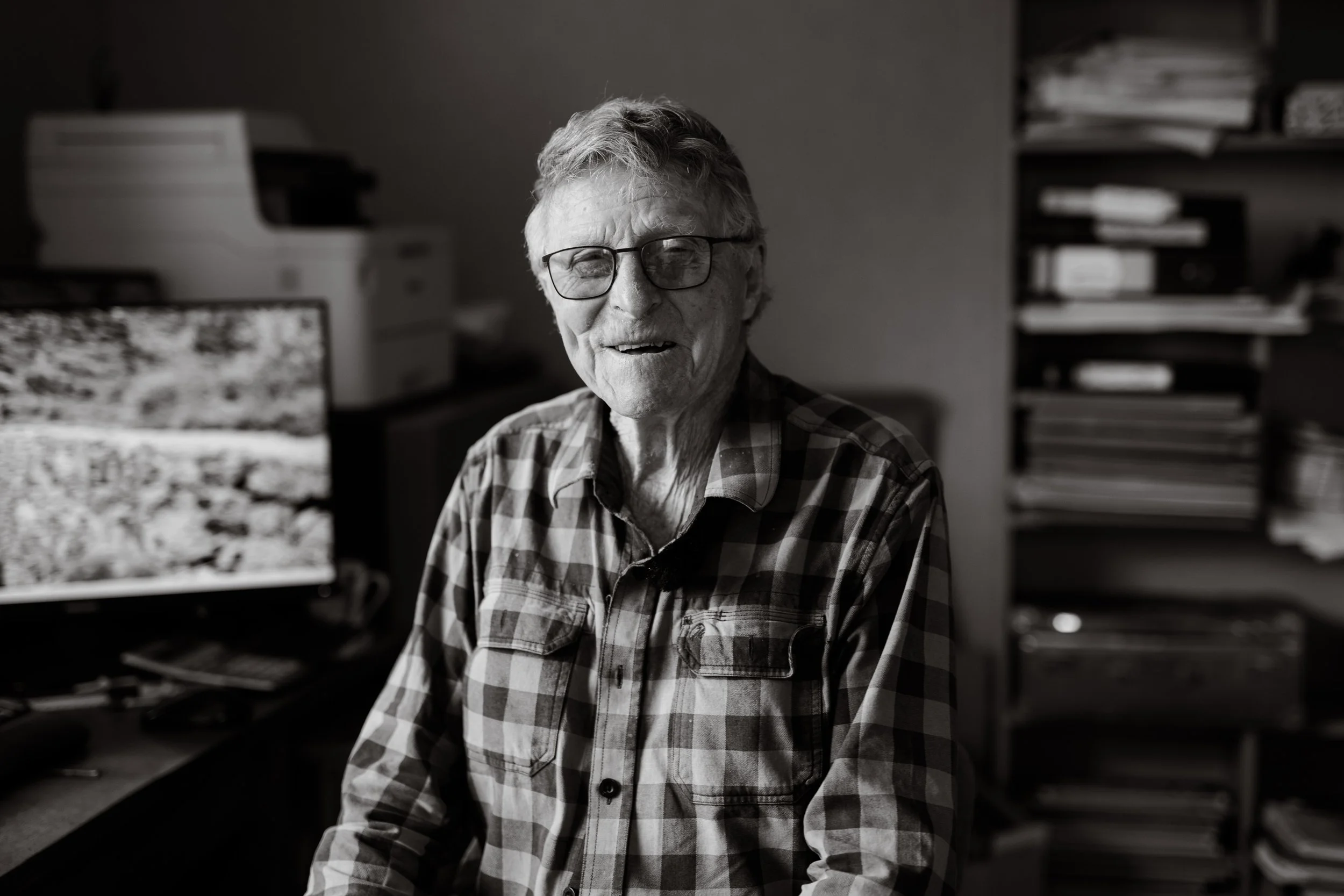
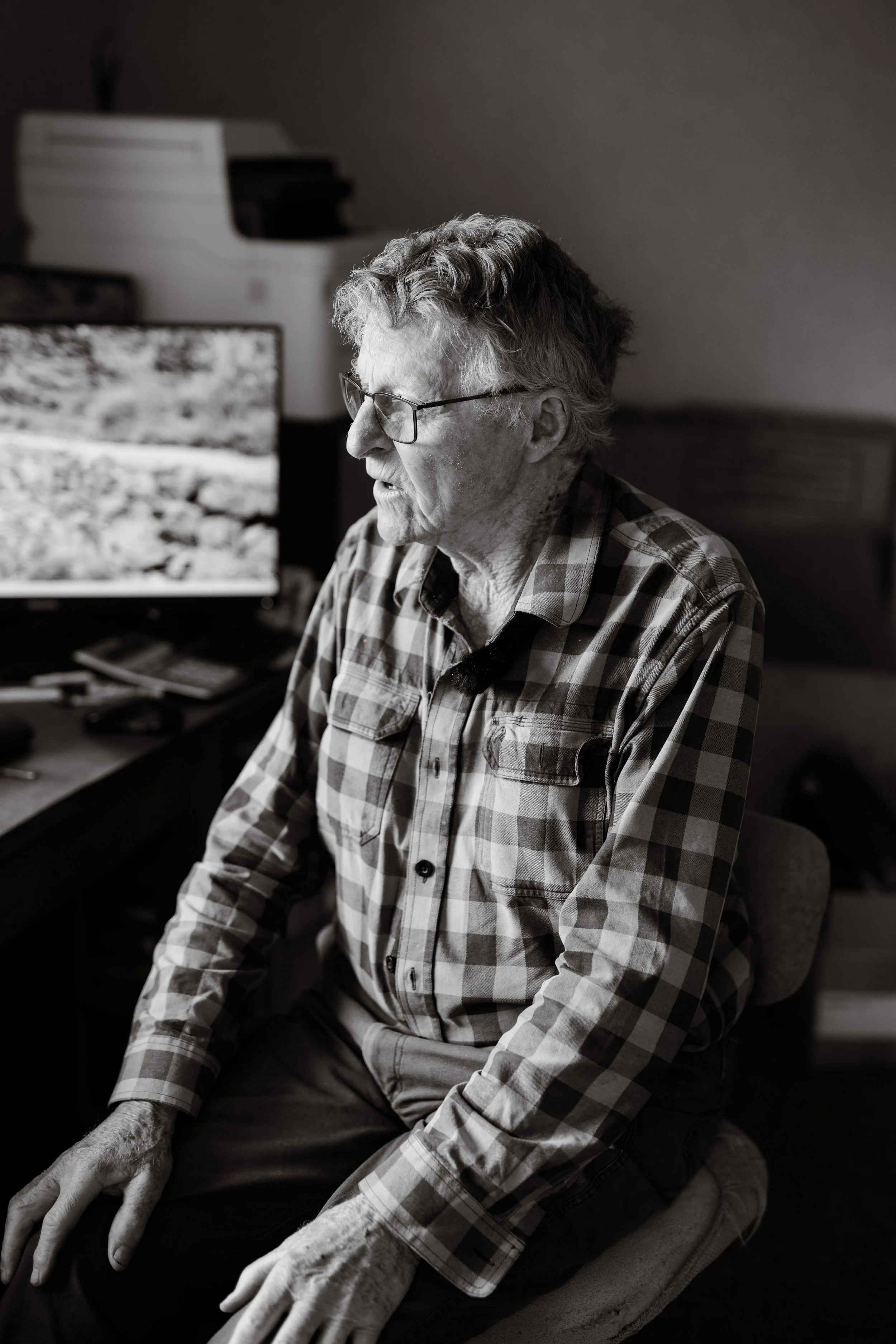
John Breen is an important rung on the ladder of Breen Construction. At 83, he may have taken a step back but John is still putting pen to paper to get all the adventures down. His is a tale of hard work done with a humble passion - one lived out at great heights, in his wide backyard.
John Breen is writing one last book. One last book about one large life - his own. John, without trying and most probably without knowing it, is a lyrical talker. He has a beautiful and particular way with words interspersed with sardonic pauses and dry laughter. A storyteller through and through.
“I’m not black and white,” John thinks out loud, “there’s shades of grey in me”. His words are full stopped with a low laugh and a raised eyebrow.
There’s no mud on John, he says it as it is and he’s as down-to-earth as they come. At 83 he’s slowed down, but he’s good with that. His life has been full - packed with adventure, hard graft and fun, “oh yeah there’s been fun alright”.
Always drawn to the outdoors, John says from a young age that adventure, “attracted me straight away”. “I started chasing rabbits, then goats, then we progressed to having a rifle that was my mate's fathers - that he didn't know we had. We kept it under the goods shed down at the railway station. His father found out and there was trouble. We got an ear bashing but that’s how we started our hunting career.”
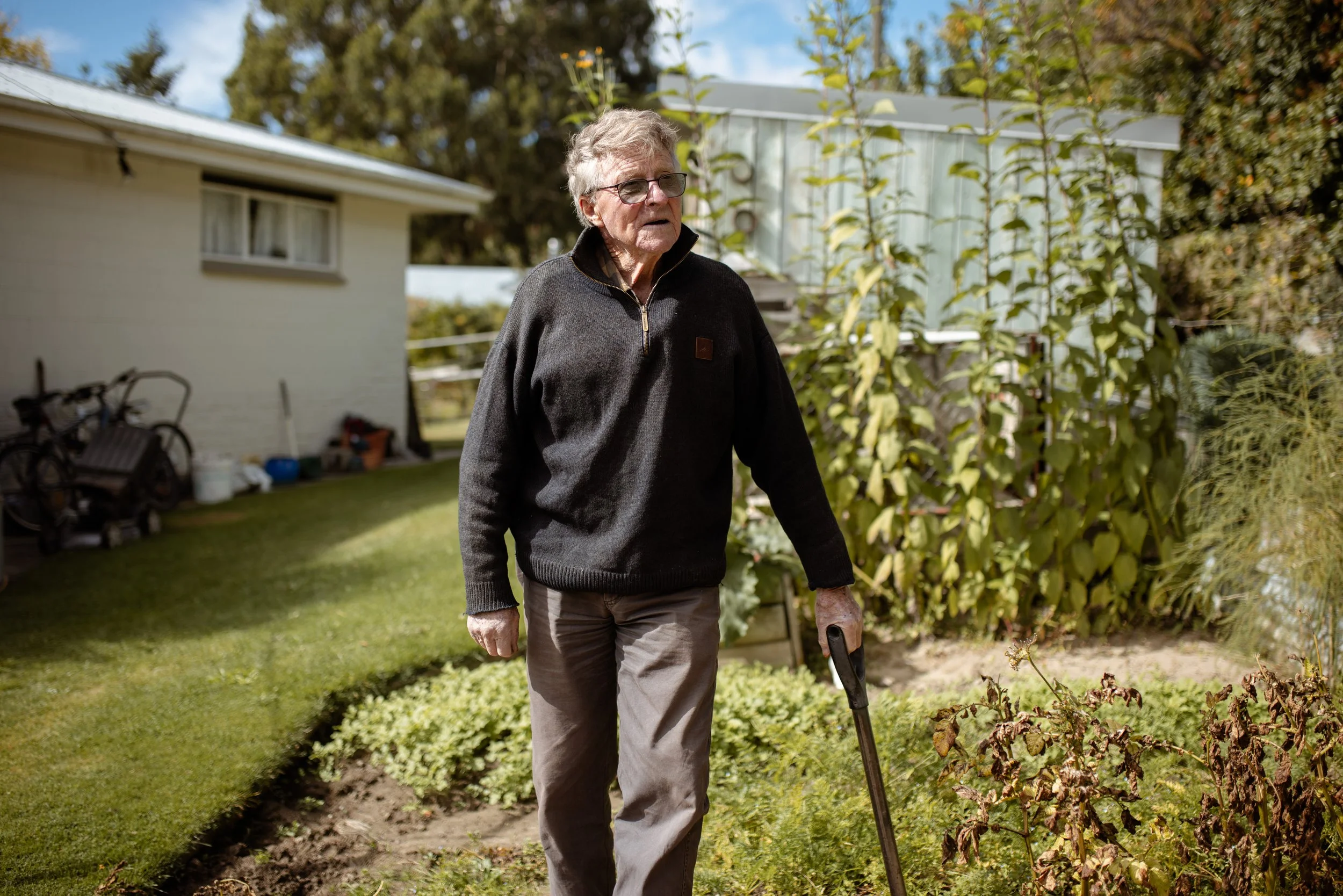
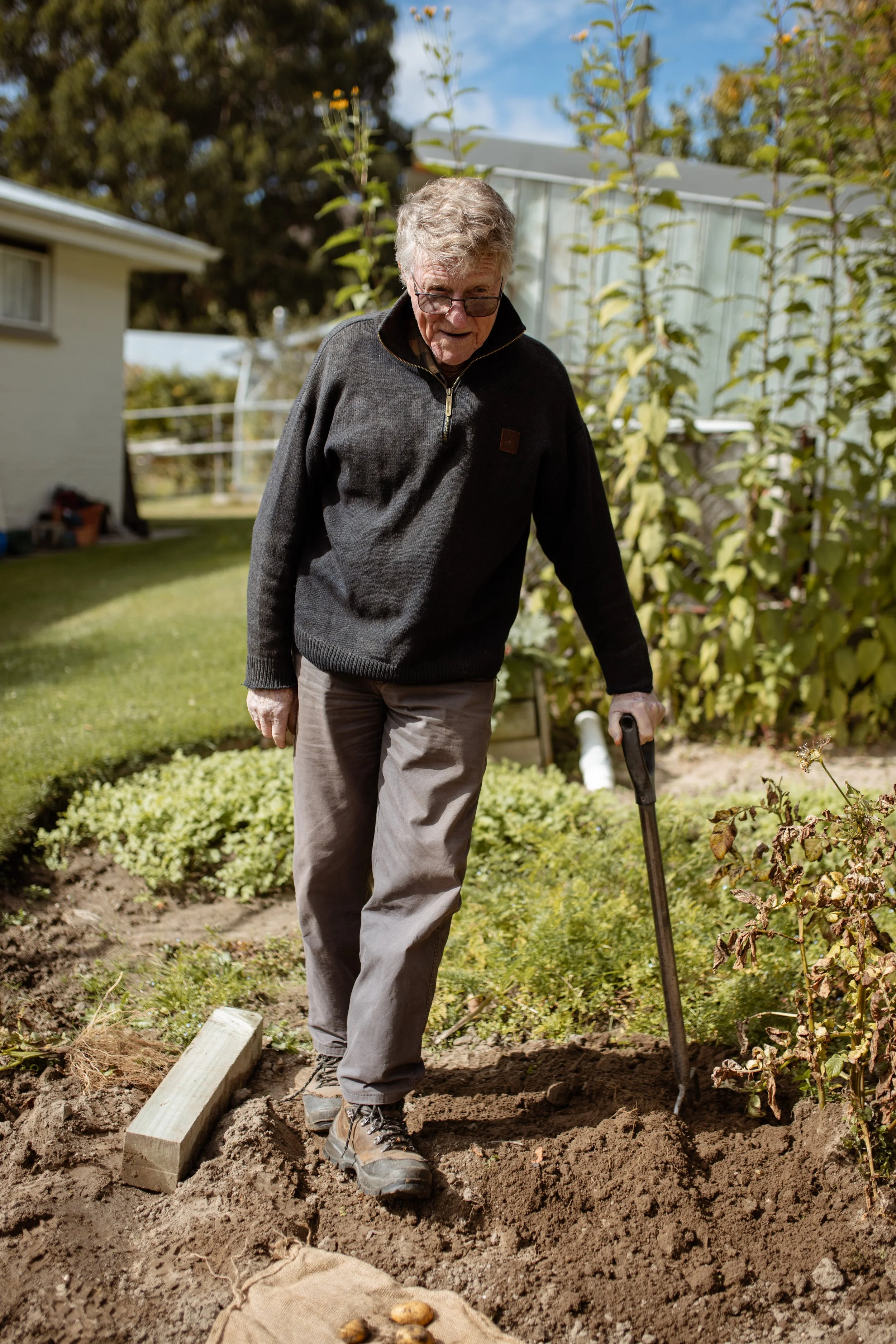
John’s horizons are a little less wide and tall now - but still bright and bold. His veggie garden is a favourite place, his memories of mountains, bush, rivers and the sea are there when he digs and plants. “I’m happy in my own backyard and my backyard has gotten smaller. I’m happy growing my tomatoes and my spuds and playing it close to the chest a little bit. My physical ability is fading which can piss you off all you like but that’s what happens isn’t it? You've just got to make the most of it.”
It’s a sentiment born from a childhood where his dad was mostly absent. John was the eldest of six and when he was born his father, a soldier, was at war in the Solomon Islands. “When he came home I didn’t want him and he didn’t want me because I was a bloody nuisance”. A harsh laugh lightens the sentiment.
John remembers Alexandra back then as a place of many orchards. A great place for fruit gathering raids and for, “young boys being young boys”.
Sent to boarding school before he was even 12 years old, John quickly had to come to terms with heavy homesickness. “But anyway, it was the best thing they did to send me to boarding school. I eventually got into my share of trouble there as well. I grew into that, that was alright.”
“I learnt to look after myself and that followed through into the rest of my life. I was out from under mum and dads apron strings.”
Pragmatism, getting on with what’s in front of you and a generous sense of irony and humour was the result and a firm knowledge that he would always return home.
“I’ve never considered leaving where I am. When I went away to school I knew I would always come back to Alexandra. I was coming home to be a builder and that was that.
That’s the way it was and the way it still is.”
Breen Construction was very much a fully formed and respected enterprise by the time John had completed his six years of study in Dunedin in 1966. He came away from there as a qualified quantity surveyor and he says he also learnt a thing or two about playing rugby and drinking from the scarfies. “I had to knuckle down when I came home,” John admits wryly.
John walked into a business with foundations built by his family before him through sheer hard work and community connections. Breen Construction was formed in 1939 by John’s uncle, Jim Breen and his grandfather, Jack Breen. John’s dad Charlie was a shareholder and later became a company director in 1945.
John has great admiration for both his grandfather and his father. Jack, as John tells it, was a bit of a character with a side of scallywag. “My grandfather was an illegal bookie in Invercargill. He had a barbershop there but he never cut hair. He was there for taking bets. There were barbers working there but that was the front. I thought that was outstanding and I have acquired an appreciation of him,” John says this with a sideways grin that perhaps his grandfather would have been proud of.
John’s father Charlie was completely self-taught in his administrative skills, having never acquired a formal education. John says his father gave him the head start he needed in the business. “My father did very well. He had an inherent intelligence and he worked very hard.”
Three of Breen’s construction jobs of the late 1930s were the Queenstown Post Office, the Waipiata Sanitorium, and the Cromwell Hospital. For those jobs the crew lived in camps which John says, reading between the lines of the building notes, "wasn't all bad as there were nurses at the sanatorium of course”.
Back then the company tendered for their jobs in the public system and community relationships were important as well. John says while many things have changed over the years, “relationships and reputation are still very important. It’s what you live and die on as a contractor.”
John stepped into more responsibility when his father became unwell in the late 60s. He says it was a “natural evolution, a natural extension and I just took it up as it came.” Over the years John worked as far north as Turoa and as far South as Port Pegasus in Stewart Island. John was very much of the opinion that saying “yes” to challenging jobs was the way to learn and “back then we figured it out as we went along. Common sense prevailed in the old days.” “Suck it and see!”, was the motto.
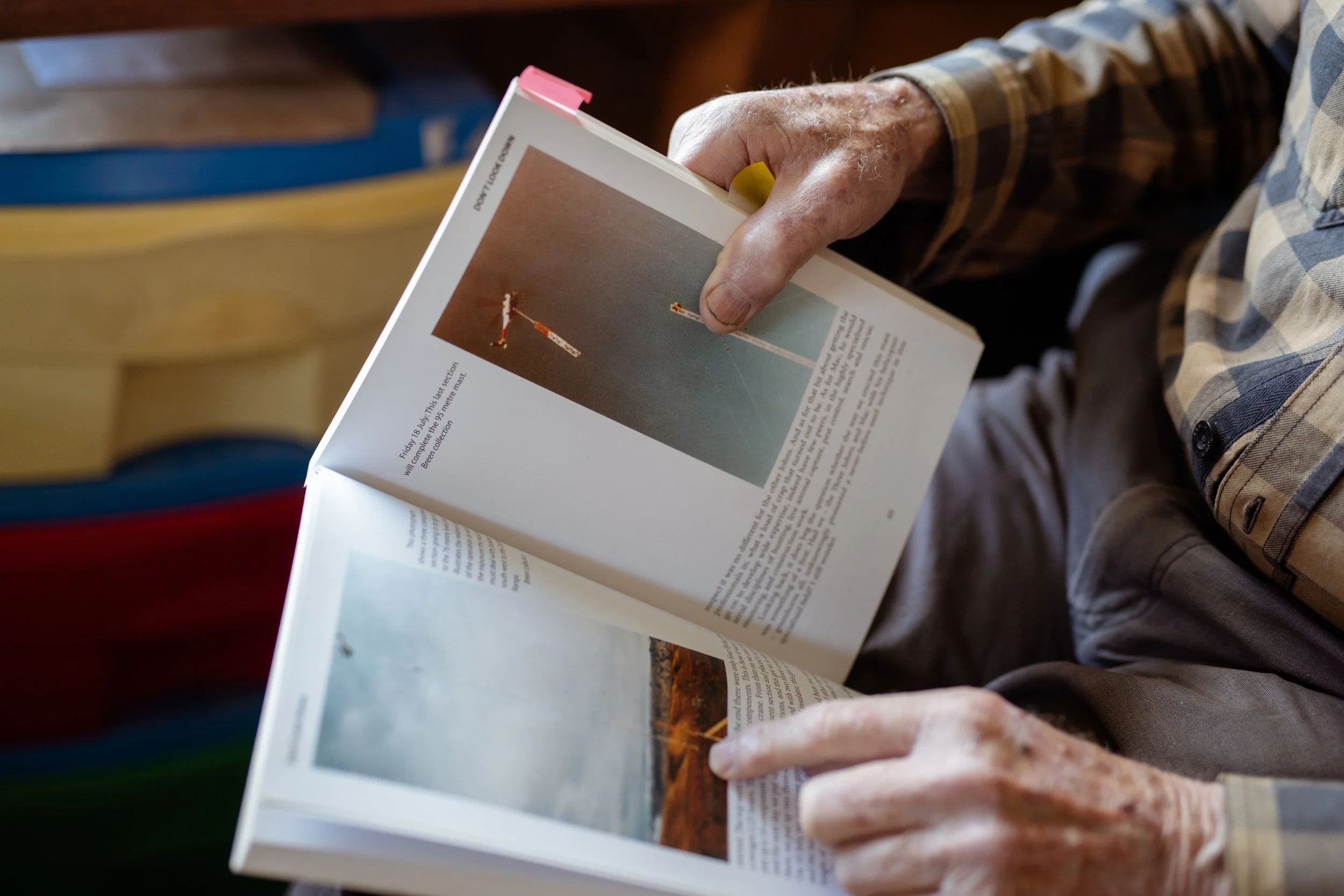

Under John’s watch, alongside his mates John Cradock and John Symons (the trio were known as the three John’s), Breen built some out-of-the-way constructions that would have had a fair few head scratching moments. “We had to overcome hard things and be competitive,” and his crew also had no aversion to getting amongst the great outdoors, nothing was too extreme. The list of adventurous projects includes the single-men’s quarters for the Ministry of Works and Development Village at Haast, the base buildings of Coronet Peak and Treble Cone, a ski tow at Turoa and radio masts for Hunt Oil at Port Pegasus on Stewart Island. The list goes on but let’s pause for a story from John about Port Pegasus, told with plenty of dramatic pauses, narrowed eyes and a gravelly tone.
“So here we are with a 200 foot mast. It was blowing - the weather was getting up and we wanted to get it secured. At one stage, there were three of us up there (the three John’s) and when we put the bolts in the pilot lost concentration for a moment. He let the tension off and there were only bolts in two corners and it started to lean over to John Cradock. If that had have carried on he would have been killed for sure. But the pilot caught himself and he brought it right and we got it done.”
“We lived in a 5000 tonne cargo ship in Port Pegasus and we flew everything off that. One night it came up to blow and we decided we needed to put additional ropes on the mast because we didn't have it fully guyed. We got in the dinghy and we spent the rest of the night putting more ropes up and then we camped out. Around the camp that night there were kiwis roaming around about as high as my knee.”
There were hairy moments over the years, in the end they could free-climb in 40 knot winds. The 95 metre mast at Springvale was the first, and man I tell you we did that hard, but from there it got better.
“We survived by doing. You've got to know how to shape a thing like you want it; nobody else is going to do it for you. Hard work works.”
Hunting is a big old passion of John’s. Begun in those early days of rifle ‘borrowing’ and continued throughout his life. He met the legendary Kerry Eggeling in 1978 while doing exactly that and Kerry ended up working on the Haast Hall, Turoa and South Coast jobs with John.
“We set up our own camp at Haast for that first job and it was as primitive as you could make it. It was put together like topsy really. We didn’t starve but it would have been meat and vege then meat and vege. I did like hunting with Eggeling, he was a top hunter and I was privileged to go with him as the boy really.”
They worked and they hunted, that was the shape of their days. “Whatever the outdoors was here I was into it. Fishing, trout fishing, duck hunting, and quail hunting. “We would do ten day trips, moose and wapiti hunting, with no communication to the outside at all. We were just self-sufficient, travelling all the time hunting and camping our way through.”
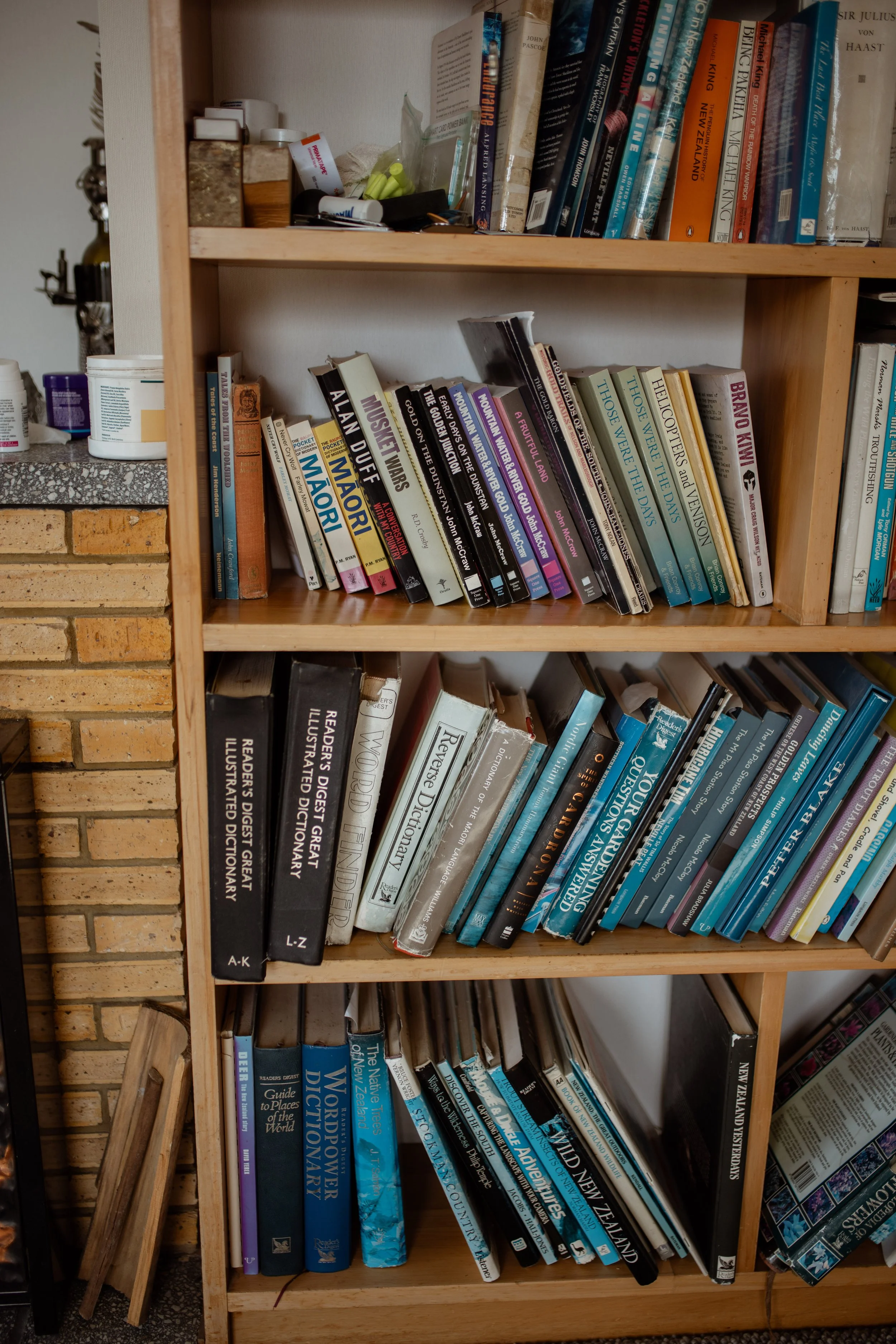
John’s writing has always been a way to get those adventures on paper - his and other people’s. John has become a bit of an accidental historian recording the real characters he has met along the way and further than that - the ancestors that came before them. John’s books are about real people and proper adventures done for the sheer joy and exhilaration of it all. The bush, the mountains, sea and land - grit, hard yakka and a feet-on-the-ground passion. There’s humour in there and a hell of a lot of heart. And this latest book in the works? “It will be the last and I’m all good with that,” says John.
“So If I can scratch my way through another book that might nicely wind up the story, in a way. You only get one go - so there’s no use curling up.”
John’s view on life, now that he’s got a decent amount of decades under his belt is this - “despite everything else there has to be at least a social morality to your life! So much of what we see today is because of the lack of that and if you haven't got that what the hell have you got?”
“We need to go back to basic, everyday proper ideas. We talk about the way that the climate is changing, you can't deny that, and yet people are still hopping in and out of aircraft just because they can. I can't buy that! I can’t see anything but hardship changing it. You need to know how bad it can get to know how good it can be. There has to be something to straighten your back up.”
“You have to be properly in tune with the environment, not be a participant in destroying it.”
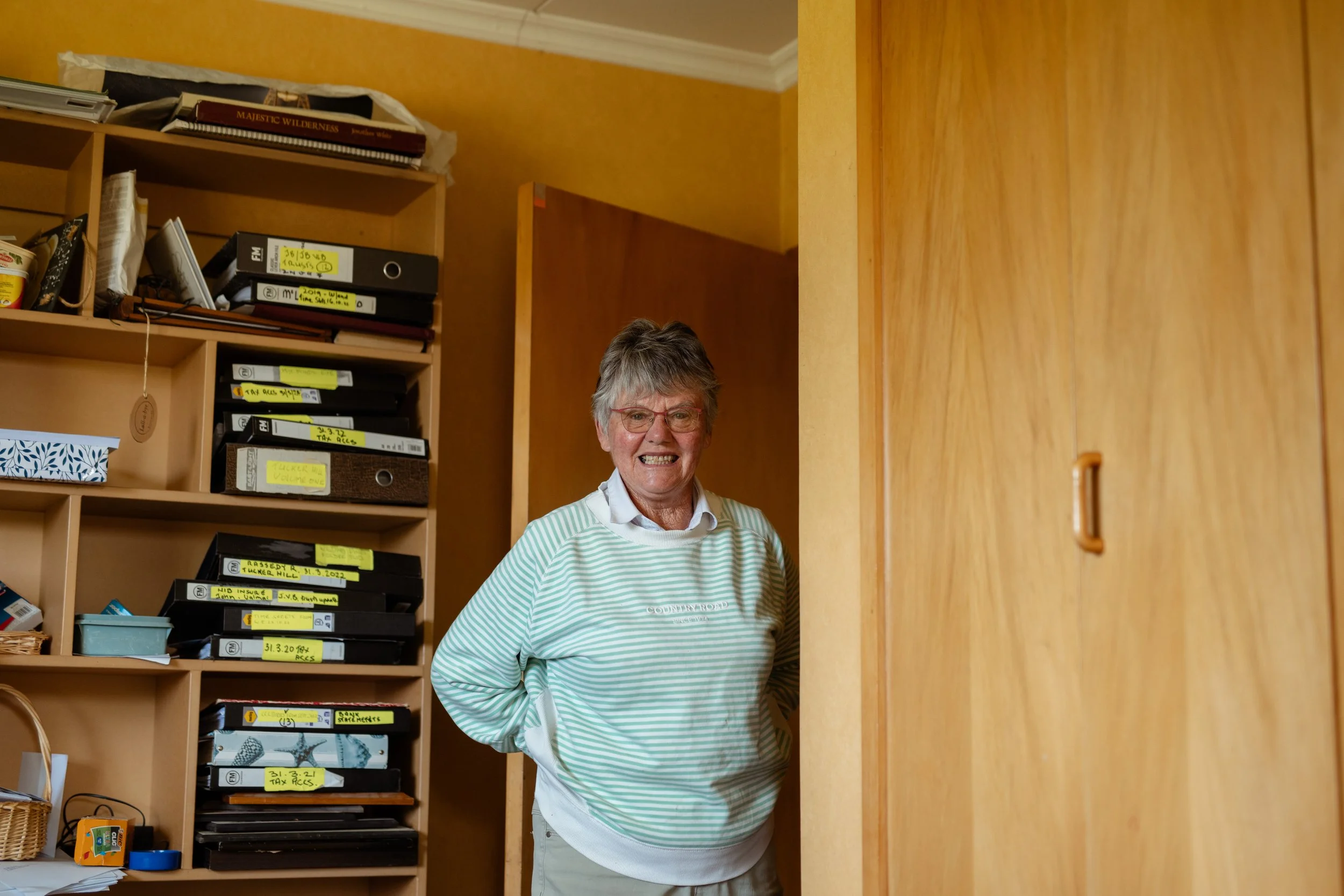
John’s wife Valmai pops her head around the door, having arrived home from helping out at the local food bank. John says Valmai is the heart of things, “the ringleader who keeps it all together”. Theirs has been a long marriage and together they have had three sons and a daughter. John retired from managing the construction business in 2003 but the company is still in the hands of family. The Breen’s are a knitted together family boasting 13 grandchildren and most recently, their first great grandchild. They all live within “cooee of here and they keep Valmai busy and me poor.”
A knock at the door heralds in John and Valmai’s granddaughter Bella who has come for lunch, a Tuesday tradition upheld for many years.
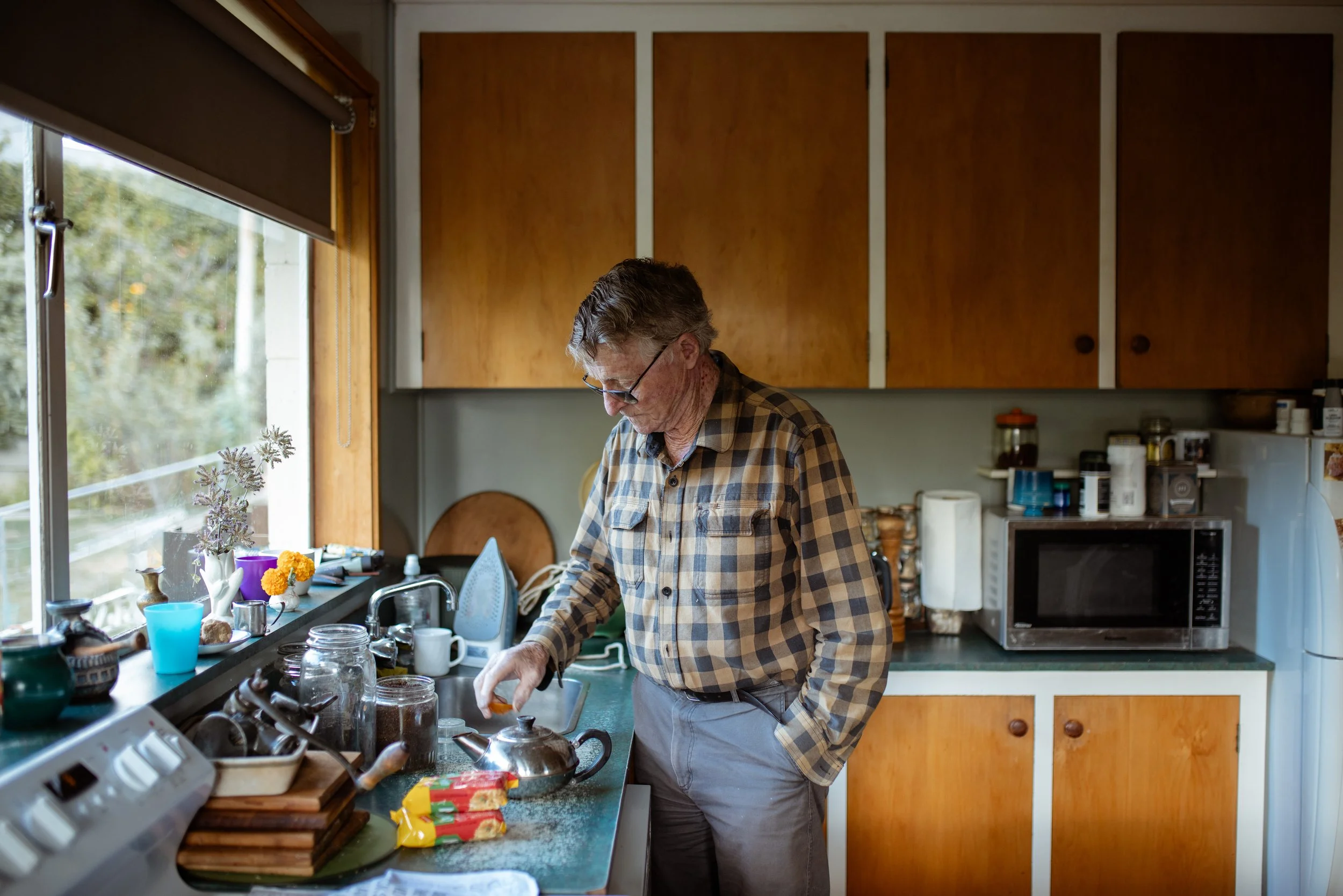
John finishes up his mug of tea, drawing a line under his ruminations. “I’ve probably got no regrets because I’ve done it and I'm just glad I have. I think I'm at rest on that one.” John pauses and again his pondering is rounded out with a laugh, “it’s been a great trip, it’s the best I can do really.”