GRAEME MURRAY
Writer: Carly Thomas
Photography & Videography: Francine Boer
Producer: Francine Boer
This story is supported by

Graeme Murray born 1944
Wānaka, Otago, Te Waipounamu
Graeme Murray has spark. In his world things are extraordinary, remarkable, amazing. In Graeme’s world miracles happen.
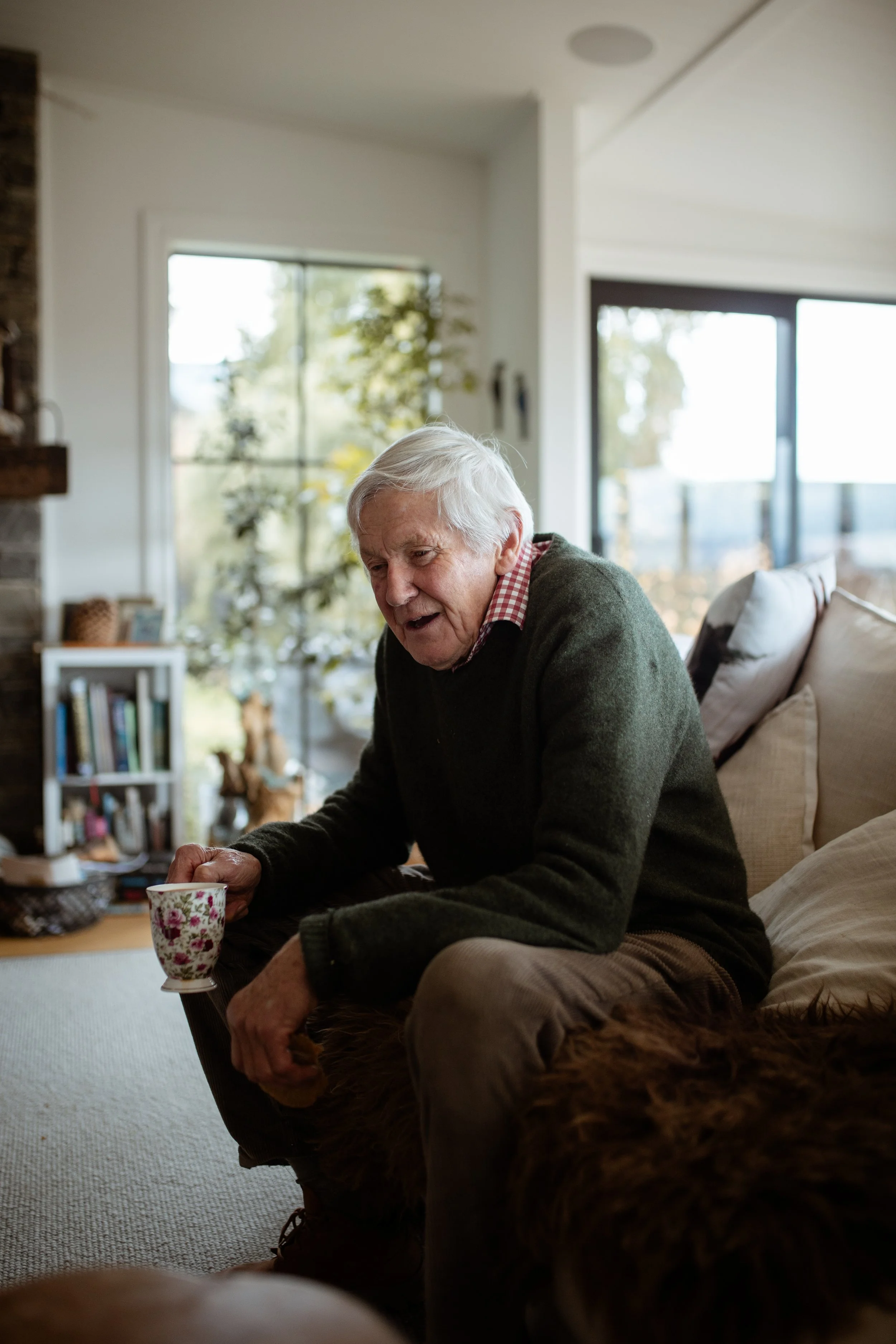
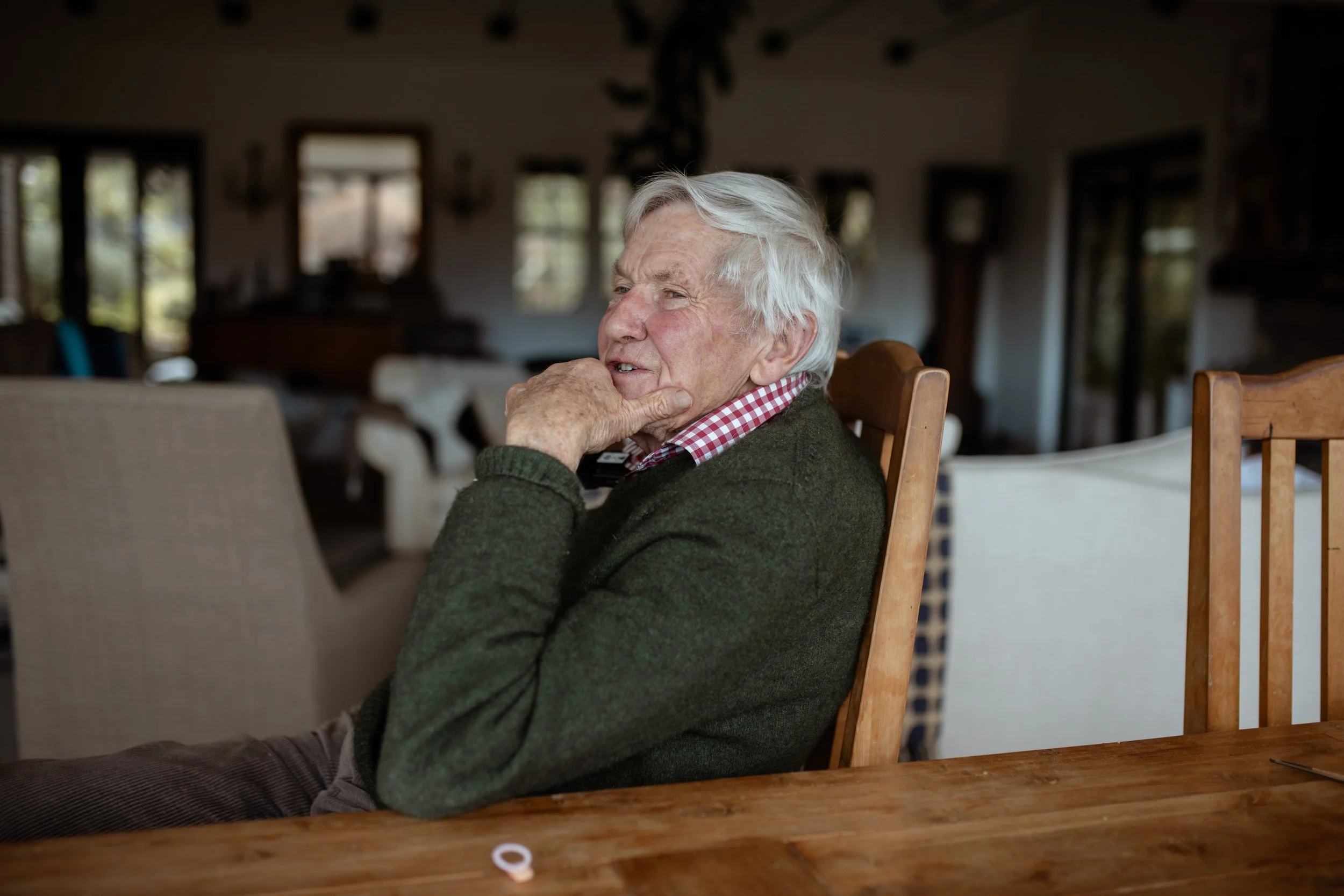
At his home in Wānaka he sits back with a steaming mug of coffee. Graeme is in a reflective mood, “I think life is all set out and there are all these different plateaus that we arrive at and we just need to handle those heights and be proud to reach the top one in the end.”
Reaching into the big wide sky is something Graeme is familiar with. He learnt to fly in his late teens and from there Graeme went on to have an aeronautical career. And if that wasn’t far enough, he also turned his face to the clear night sky of Takapō and dreamed up how to protect it. Graeme’s story is vast, filled with serendipitous twists and turns and a decent dose of adventure - but it starts off in the little town of Temuka, where his parents had a grocery shop and service station on the town's main drag.
Graeme admits to thinking Temuka was “the worst place on earth” as a child, but he is grateful for it now. “I had a very normal upbringing with great parents who gave us kids our own mind and the petrol in the tank to get us to where we wanted to be. That’s a big thing in life. If you get your freedom and your nose into the wind you’ll be ok.”
Hunting was a way for Graeme to push the boundaries of that freedom and he says he was very much pulled towards “the wild country”. “In my teens there were some great people around that took younger people like me into the mountains with them on hunting trips. I got into the mountains and into that life and I didn’t look back.”
In his little Morris Minor convertible Graeme would charge off into the hills offering station owners a day's work in lieu of a day's hunting on their land. That method got him into some incredible places including one of New Zealand’s largest stations, Mesopotamia. “I was very much intoxicated by Mesopotamia. That place became my second home and it opened up a whole lot of possibilities for me”.
It was there he met the station owner's son, Laurie Prouting who owned a pint-sized Auster aeroplane. Together they would wing around the station finding hunting spots and enjoying some “remarkable adventures”. Graeme obtained his pilot’s license and his world got a whole lot bigger. He was working at Dalgety’s at the time having started off in the agricultural company as the office boy with high hopes of becoming a stock agent and eventually a farmer. However those early dreams didn’t come to fruition, but instead what happened next Graeme calls his “chapter of miracles”.
Rather than being put in the stock department, Graeme’s manager gave him a job in the travel section of the company. Graeme recalls being close to tears when he was told, “I said I had no interest in travel”, but his manager told him it was a career that would take him places he could only dream of. “And he was right,” says Graeme with a grin.
It got him to South Africa where he was a tour guide for a group from the New Zealand Hereford’s Association and it eventually got him to far-flung Patagonia, a place that has been etched in his memory and heart. He spent a month being humbled by the country's hospitality and high mountains and he says it was there that he really learnt about the spark of life, “my time in Patagonia threaded on to so many things that happened”.
The pages of Graeme’s story turned and with his follow-your-nose attitude it was a chance meeting that decided the next chapter. Graeme had written to the manager of a Lake Takapō Station offering up his work for a hunt deal and was given the thumbs-up and directions to meet up with some other young men who would be clearing back some willow trees. It was here he met Richard Rayward who, along with becoming a firm friend with Graeme and Laurie from Mesopotamia, also became a business partner.
“There were so many game animals on Mesopotamia and Laurie’s dad Malcolm was very forward thinking for those days. He had ideas about how they could be used rather than just poisoning and destroying them and so Air Safaris was formed. We bought a Cesnar 185 and took overseas hunters into the mountains. Richard and I then moved across to Takapō and that went very well”.
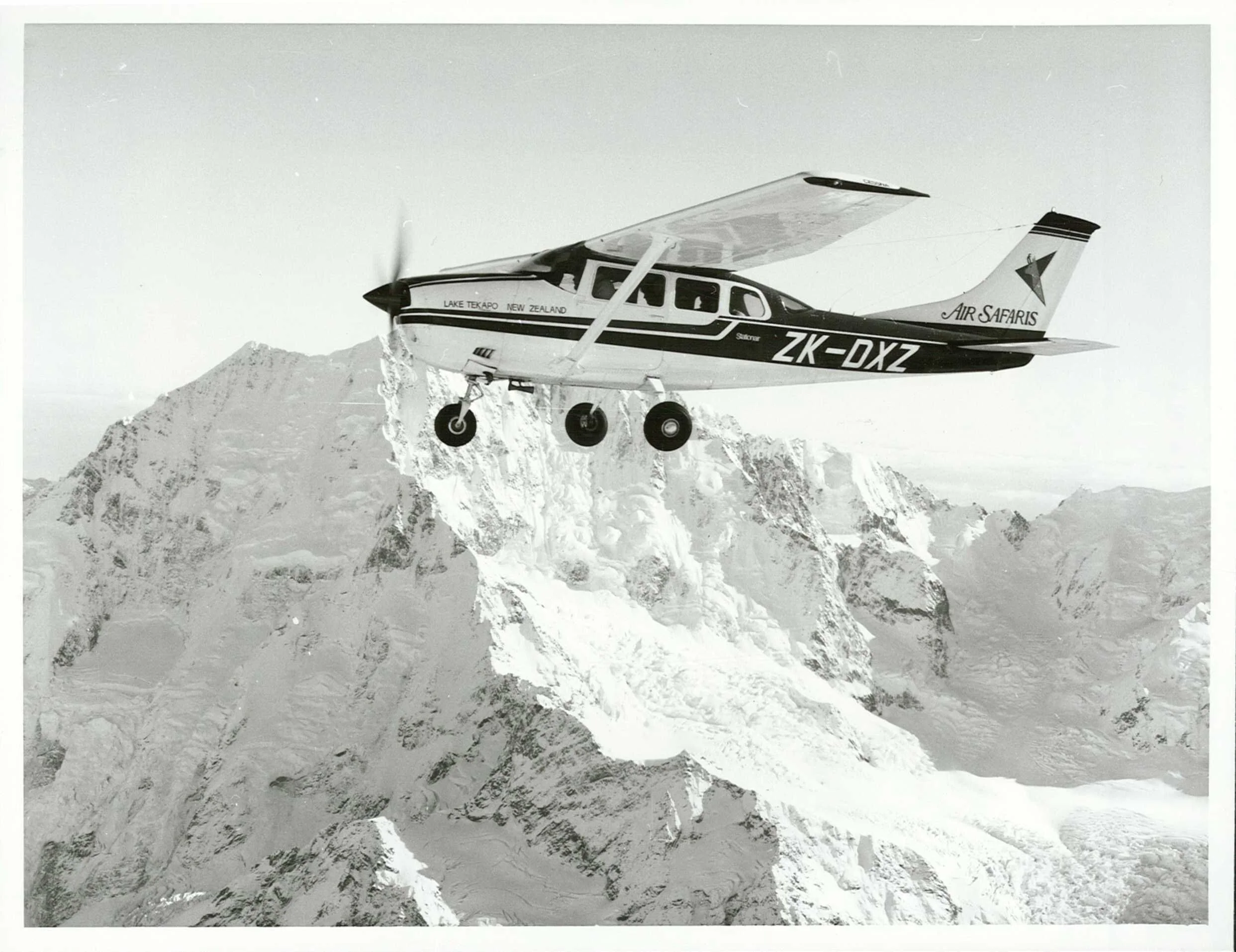
The company flew people in to see Mount Cook and the glaciers and Air Safaris eventually grew to having 12 aircraft in the hangar. Graeme’s personality came in handy and his role was to fill seats. “If I was skinny to start with I was skinnier after as I ran around trying to find 100 people to fill the seats. But we did and we would fly around 40,000 people a year”.
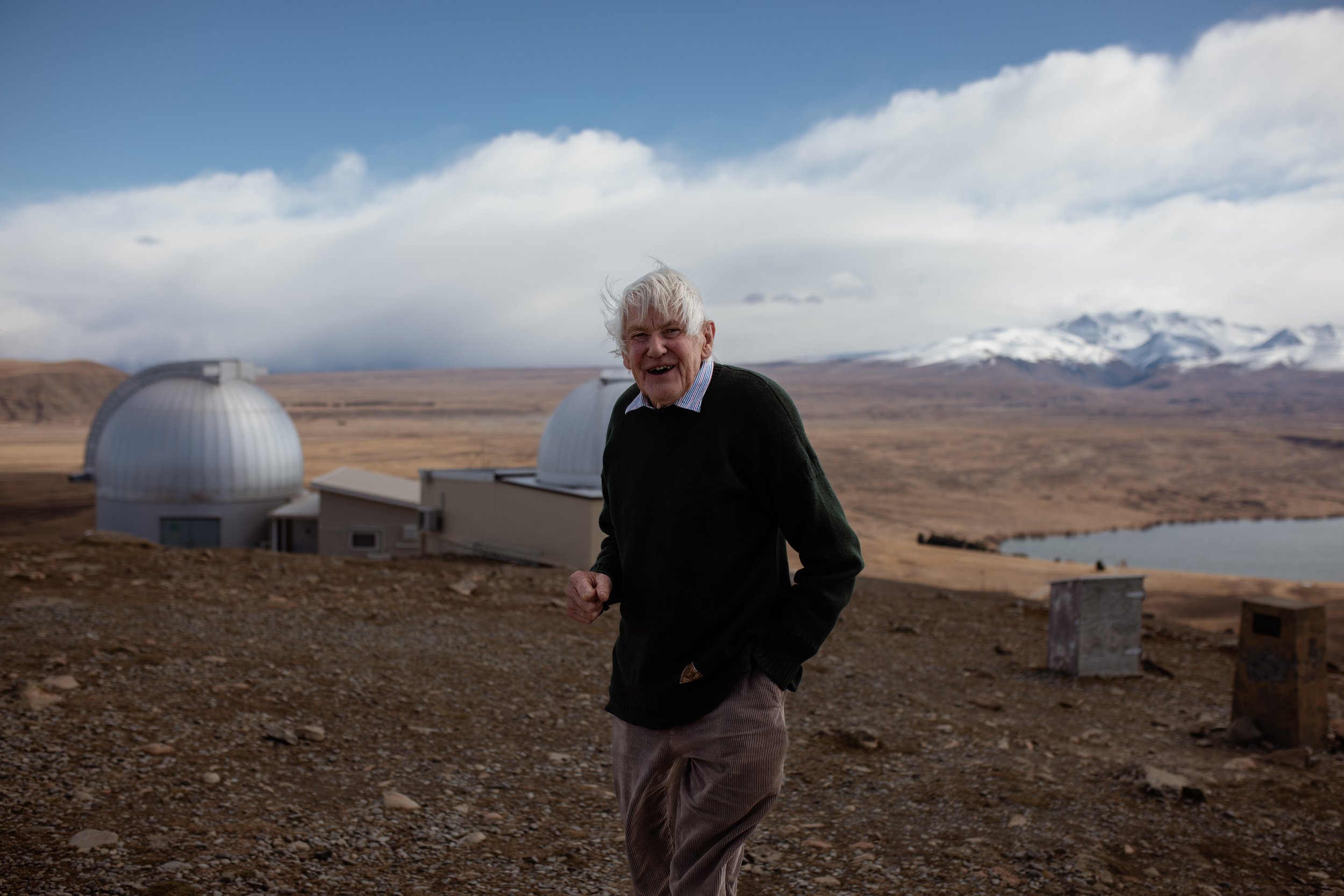
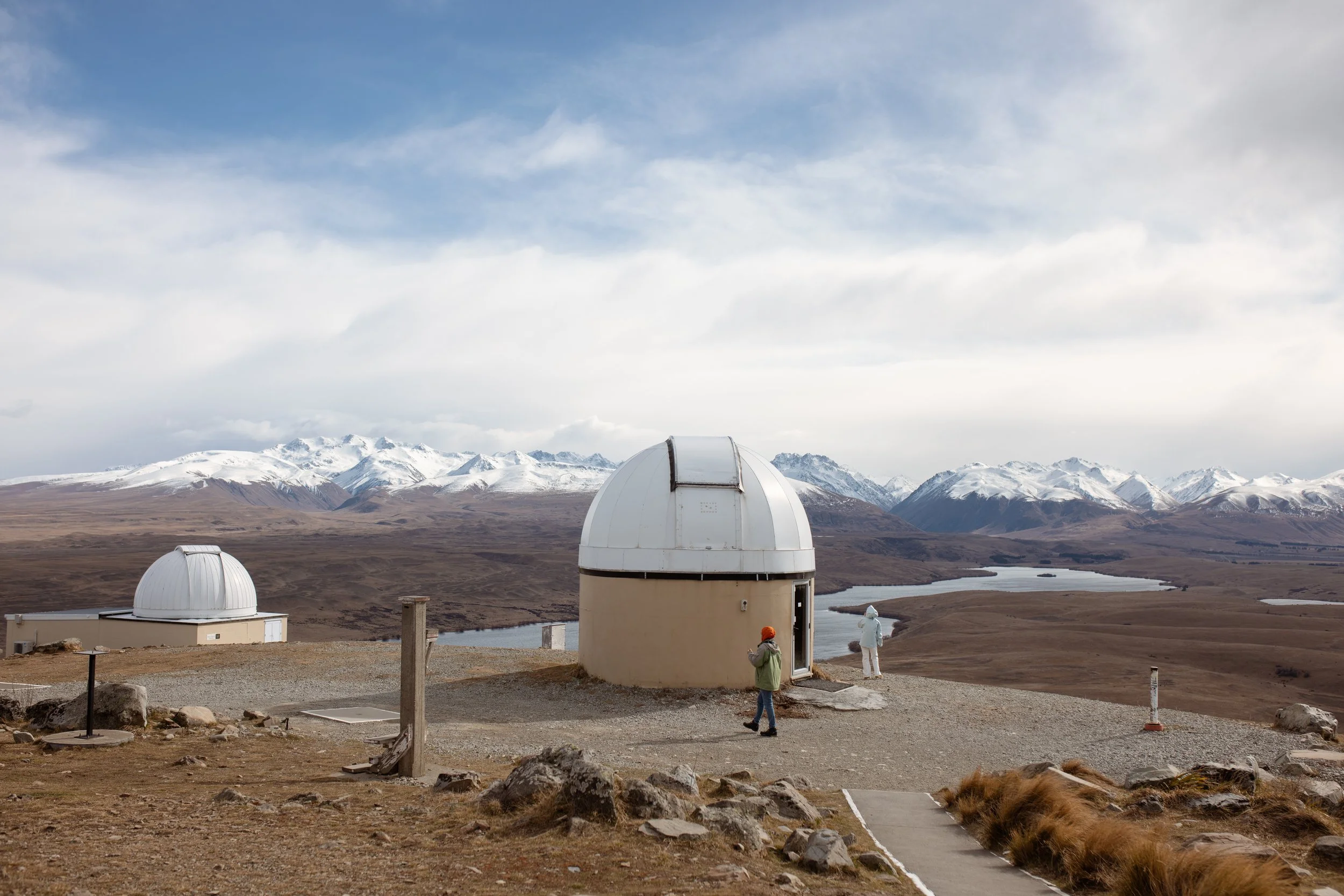
Graeme stuck with Air Safaris for 30 years and once he sold his part of the business he didn’t settle in for a quiet life. No, he did what Graeme has always done - he let the wind blow him towards the next adventure. “Incredibly I had a knock on the door one night and it was a good friend, Hide Ozkawa. He explained to us that Nagoya University in Japan wanted to put a leading edge telescope on the top of Mt John. The universities were all keen to be involved but none of them were prepared to put any money in.” Hide and Graeme talked late into the night, both fuelling each other's enthusiasm. The next morning the excitement continued and propelled them to Christchurch where they talked with Professor Phil Butler, the head of astronomy and physics at Canterbury University at the time. “He gave us 24 hours to put up a proposal. So Hide and I stayed the night and we put this thing together”.
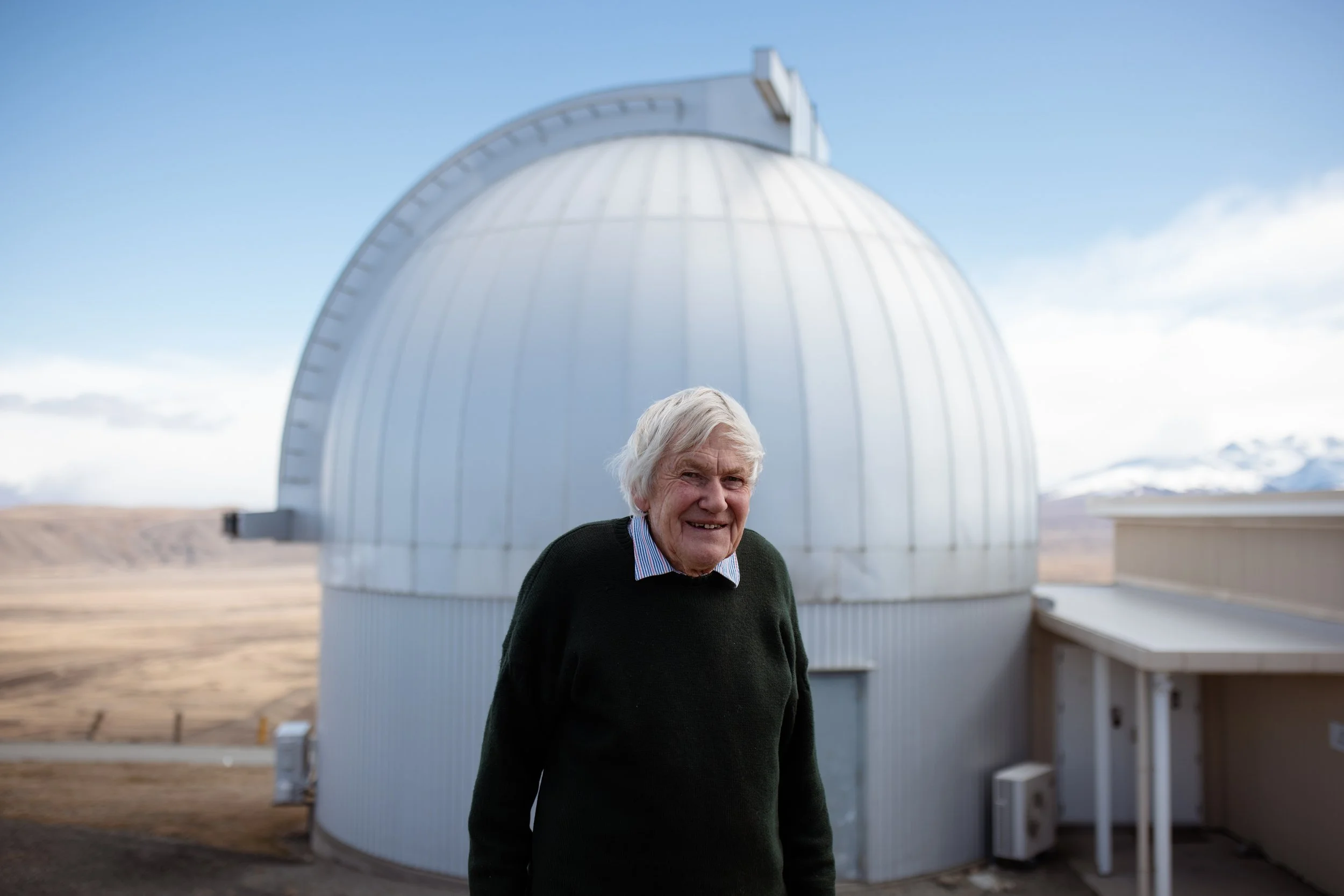
It worked and what followed was “nothing short of a miracle” says Graeme with flashing eyes. Nagoya University installed the 1.8 MOA telescope on Mt John and as recognition of their work Graeme and Hide were given the right to host exclusive tourism experiences at the summit of the mountain. Their little company Earth and Sky was born and what transpired in the years to come takes Graeme’s story to new heights.
“Something quite incredible happened there. One night Hide and I sat up talking with the stars above us and Hide said to me “you New Zealanders take your stars for granted, you don't appreciate the asset you have up there in the night sky. If we had a sky like this in Japan we would create a park to protect it”. Those words hit Graeme hard and he says he then went on a crusade to make that very thing happen.
Through Professor Phil Butler, Graeme was introduced to the honourable Margeret Austin who was the senior member of UNESCO World Heritage. The serendipity really kicked in here while over dinner Graeme passionately put his case forward. The result was immediate, “well I liken it to putting a safety pin onto the back end of a spit fire and then trying to hang on because through UNESCO Margaret had all the contacts and the mana. They arranged for me to go to a big conference in the Canary Islands and anyone who was anyone was there.”
Graeme had a speaking right for 20 minutes and in true form he really put use to that time. Graeme waxed lyrical. He told the 600 attendees about the sky in Takapō being one of the darkest in the world, a masterpiece of stars. He mapped out New Zealand’s indigenous history and the ingenuity of Māori who used the stars to navigate and plant crops by. “It seemed to go well,” says Graeme humbly. “We were walking the streets the next day and this man came and tapped me on the shoulder and told us excitedly that we had the whole endorsement of the conference”.
A year later UNESCO World Heritage nominated Mt John observatory and its environs in Takapō as the pilot scheme for the first world heritage national park in the sky. “The world went mad even though most New Zealanders don't realise what happened. We had 50 overseas documentary teams in 52 weeks. A hundred million people were learning what we were doing with our night sky . Our world took off and we moved from 3 staff to 90”. Graeme recognised the importance of having Ngāi Tahu involvement and they came into partnership.
“I felt very proud and very privileged to be surrounded by people who share the dream. I’m part of the Ngāi Tahu whānau now which I appreciate very much. Their understanding is much more ancient and deep than for the Europeans - for them everything was done by the stars - there's a lot of pleasure in being part of ensuring that knowledge is kept alive.”
And does the story end here? The grand and sweeping narrative that has been Graeme’s life. No, because Graeme, at age 81, is still fired up. He can still see further and beyond. “The mystery of the night sky, a whole new world we haven’t even started to understand.” He throws his hands out and chuckles, “it’s exciting isn’t it?”.